September 10th, 2020
What You’ll Read About:
- How notions of gender have shaped child-rearing and education
- Me exploring how the products and media I was exposed to as a child/teen + how it influenced my own experience and notions of gender and science
- Social Learning Theory of gender


Chelsea Aleong
4th-year DHSS student
I’m a fourth year Digital Humanities and Social Sciences student at the Rochester Institute of Technology. I aim to consistently take pride in my work and expand my design & marketing skill set. My passion is to explore my creativity while achieving the best possible product for my target audience.
I’m from Buffalo, New York and based in Rochester. I currently work as a Peer Navigator for the College of Liberal Arts. I also love rooting for the Buffalo Bills and a proud cat mom of two.
Thinking back
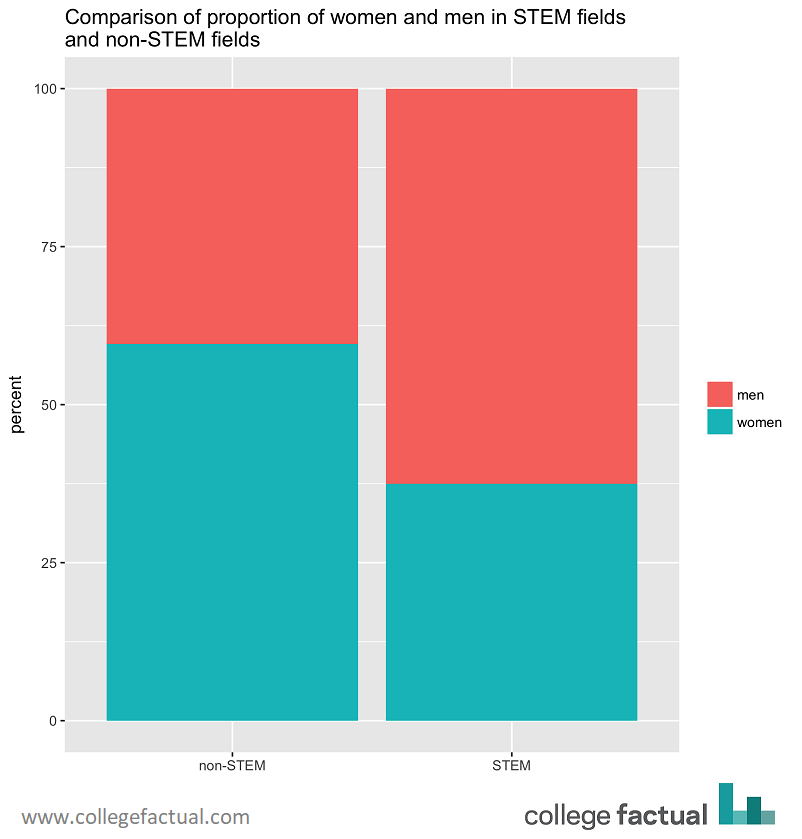
When I really think about my childhood and experiences growing up, in terms of education and other socialization settings, I was never presented with the option to possess the characteristics of neither boy nor girl, only the concepts of ‘masculine’ and ‘feminine’ existed through labels such as ‘tomboy’ and ‘girly-girl’, both labels being under the umbrella of being a girl. I wasn’t even aware of the fact that identifying as non-binary was a concept until I got to high school, not because I was educated on it, but because I discovered it myself through the use of social media. That is a huge red flag that lets us know how ridiculously socially constrained to binary constructs education systems have been in the past. It’s great that school systems are making progress by implementing gender-inclusive bathrooms, Gay-Straight Alliances, and safe spaces for students, but there is still a long way to go. In different areas throughout the world, women (if they are even permitted to pursue education) are continuously pushed towards pursuing the arts while men are pressured to stick with STEM. “Women face an additional burden in having to follow the rules to be seen seriously as a scientist. In their personal lives outside scientific culture, women face the pressure of conforming to our culture’s notions of ‘femininity.’ But once they come to work, within scientific culture, they have to leave that identity behind, to assume another, namely, a form of ‘masculinity.’ Often, this takes the form of dissembling behaviors” (BANU SUBRAMANIAM, 194). Because of the biological differences between men and women, sexist gender roles are established socially on the basis of how the binary sexes perform emotionally and mentally. Even though it is proven that biologically men and women’s brains work differently, but gender roles blow this concept out of proportion to an unnecessary extent by applying it to abilities in career fields.
This article by Saul McLeod focuses on the aspects of the Social Learning Theory by Albert Bandura. The author looks at the binary constructs and theories surrounding gender/sex in childhood development. Moreover, McLeod emphasizes how behavior is learned from the environment through the process of observational learning, hinting at the fact that children grow up learning the social construct of the binary gender roles assigned to men and women. He also states how children pay attention to people and learn their behavior, and it is very likely that a child will reproduce the behavior that its society deems appropriate for its gender. They first imitate the models that they perceive similar to themselves, then the people around the child will respond to the gendered behavior they imitate with reinforcement or punishment. The Social Learning Theory can be applied to the kinds of gendered medium children consume. Below, I’ve listed some first-hand artifacts and personal experiences of types of media that children of different age groups consume and engage with.
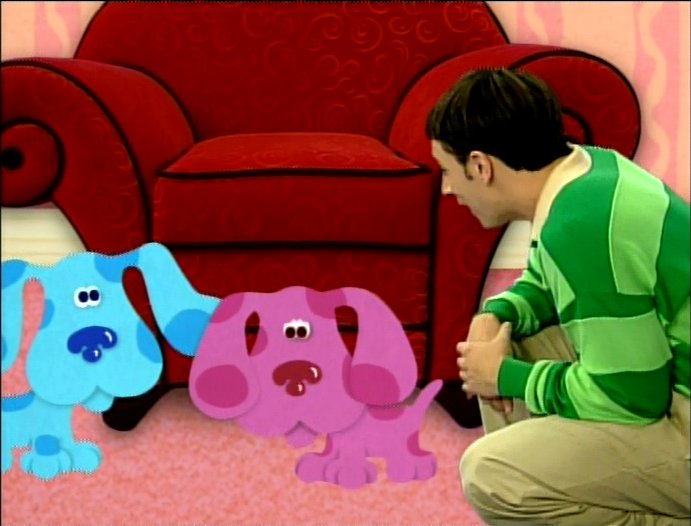
Ages 0-4: Blues Clues
Blue’s Clues was one of my favorite educational shows as a preschooler… like actually a die-hard fan of the show and I would become ridiculously excited as soon as I saw the blue paw print on screen. As long as I can remember, I always assumed Blue was a boy and the other pink dog, Magenta, was a girl, because I learned from my socio-cultural surroundings that blue is for boys and pink is for girls. I was shocked to find out only a few years ago my freshman year of college that both characters are in fact girls, regardless of color.

Ages 5-12: McDonald’s Toys
McDonald’s Happy Meals are a prime example of enforcing boundaries of gender through toys. Whenever I went to McDonald’s with my parents and ordered a Happy Meal, I had to choose between wanting the girls’ toy or the boys’ toy. I felt a tremendous amount of pressure each time we would order because I would always select the boys’ toys because of how cool they were, but would feel judged each time by people around me. In this picture, McDonald’s chains in Spain designates the boys’ toys as Pokemon, and the girls’ toys as Hello Kitty. I mean, this is more recent and a newer generation of Pokemon, but if I had to choose why wouldn’t I want Pikachu?! Thankfully, a House Resolution in Michigan introduced on November 28, 2018, which urges food establishments and franchises to stop gender classification of kid’s meal toys. Now, for the most part, many establishments are mandated to give the choice of one toy or the other instead of saying girl’s or boy’s toy.

Age 13-17: Video games
Don’t get me wrong, I love playing video games in my free time with all my heart and I highly respect the work and development that go into making them. However, I can easily say that video games are an extremely touchy subject in itself when looking through the lens of the [under]representation of women, as an array of toxicities surrounds the gaming community. Some of these toxicities can range from sexist character design to verbal harassment in chat rooms. Unfortunately, I can say that I have been harassed on the basis of my gender a multitude of times. Because of the harassment in chat rooms and the sexualization character design of female characters, the Social Learning Theory can also be applied to this concept of gender discrimination and objectification and subject young adults to a life of sexist behaviors. As stated by Robert Sapolsky in The Trouble with Testosterone and Other Essays on the Human Predicament, “the genetics of behavior is usually meaningless outside the context of social factors and environment in which it occurs.” Interpret that as you will!
Bonus Content (captions in video):
And that’s the tea on that! Thanks for reading, and see you next time!
– Chelsea

Word count: 866
Sources:
“Resistance Is Futile! You Will Be Assimilated: Gender and the Making of Scientists.” Ghost Stories for Darwin: The Science of Variation and the Politics of Diversity, by BANU SUBRAMANIAM, University of Illinois Press, 2014, pp. 180–199. JSTOR, http://www.jstor.org/stable/10.5406/j.ctt6wr5ch.13. Accessed 11 Sept. 2020.
© 1997. From the book The Trouble with Testosterone and Other Essays on the Human Predicament, by Robert Sapolsky, 1998, Simon & Schuster.
http://www.syko.org/2017/09/mcdonalds-spain-getting-pokemon-happy.html
 Chats with Chelsea